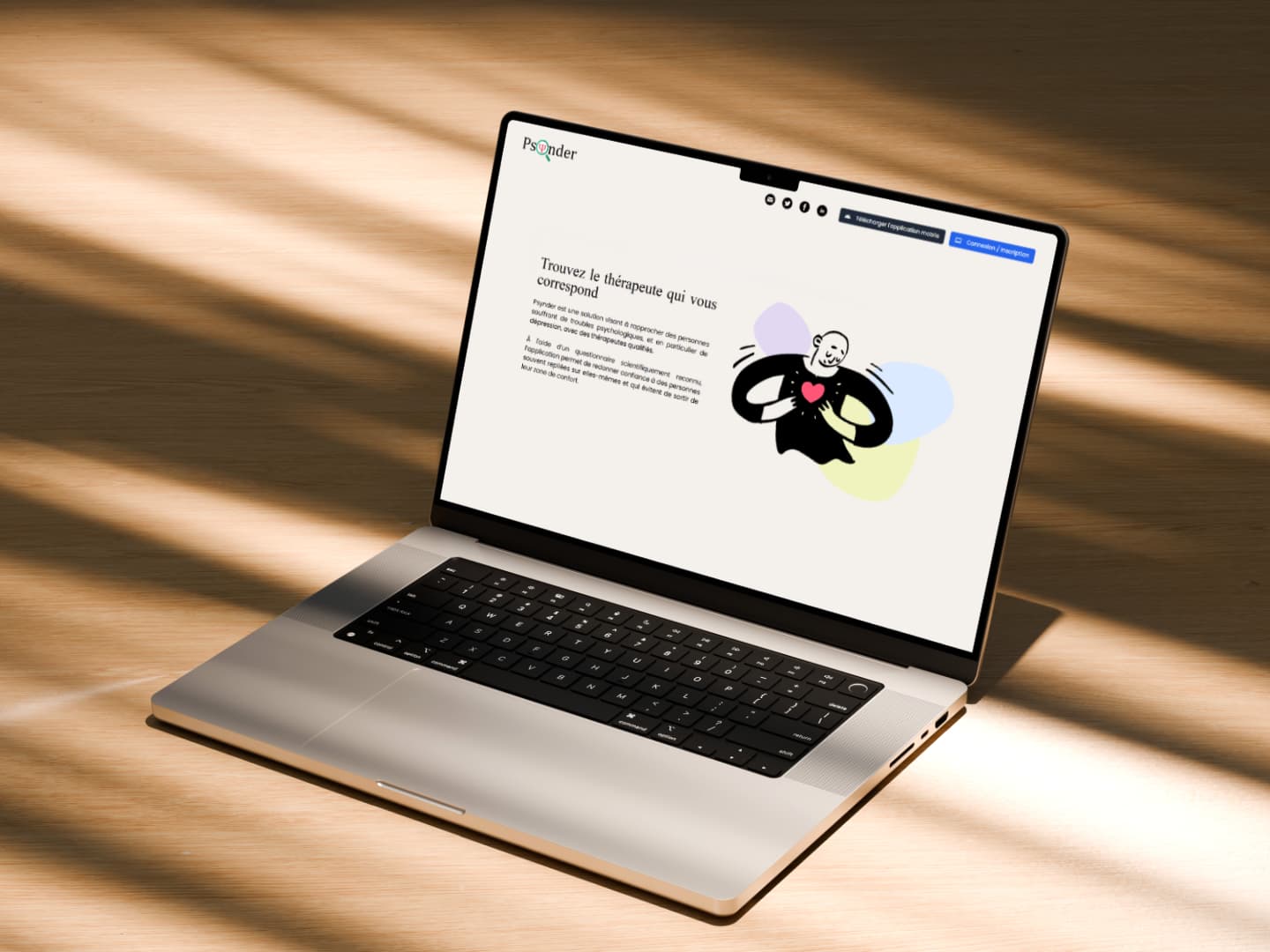
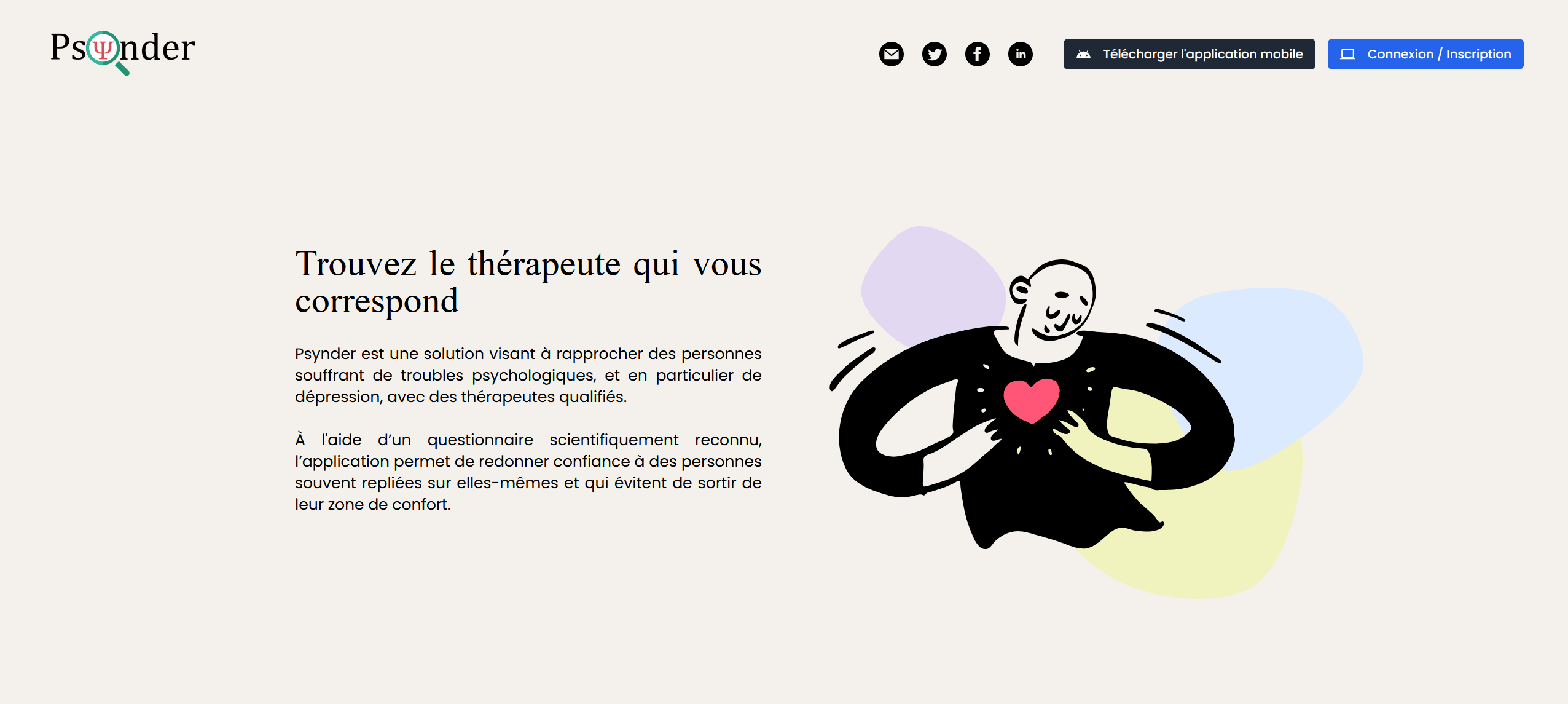
Psynder
THE PROJECT
Psynder is a solution aimed at connecting people suffering from psychological disorders, particularly depression, with qualified therapists. Through a scientifically recognized questionnaire, the app helps rebuild confidence in people who are often withdrawn and avoid stepping out of their comfort zone.
THE CHALLENGE
Psynder is my final-year project, carried out as part of the Epitech Innovative Project (EIP), conducted from my third year through to the end of my studies at Epitech.
This project was particularly meaningful to the team, as the subject of depression touched us all in one way or another. The goal was to design a tool that could provide concrete, accessible support to those affected.
The main challenge turned out to be human, not technical. The project began shortly before the COVID-19 crisis, during which access to mental health professionals became extremely limited due to the high demand caused by successive lockdowns — which effectively made our beta-testing phase nearly nonexistent.
We were nevertheless able to rely on the support of a professor from the University of Psychology in Nantes, who provided us with a reference document used in the field. This served as the basis for developing a multiple-choice questionnaire to identify and differentiate certain depressive disorders, in a strictly informative and educational context.
Since we were not professionals in this field ourselves, we could not assert with certainty that a person suffered from a specific disorder — it remained a suggestion to help redirect them to professionals we believed were best suited to their needs.
THE TECHNICAL SOLUTION
Originally, my role was focused on backend development, including the API and database. However, as the project progressed, I was involved across all areas: project management, functional design, UX/UI design and prototyping, documentation, web development, API, database, testing, and online deployment (DevOps with Docker and Docker Compose).
The API was built with Node.js, Express, and MongoDB. The web application was built with Angular and Tailwind CSS for the user interface, while a cross-platform mobile app was developed in React Native, targeting Android and iOS.
Among my major contributions was the design and development of a matching algorithm. This work took significant research into the domain before I could propose logic that held together. The project constraints did not allow us to fully validate the algorithm during the beta-testing phase, but the research and design work behind it taught me a lot.
You can find more details on this clone of the project repository:

GALLERY